

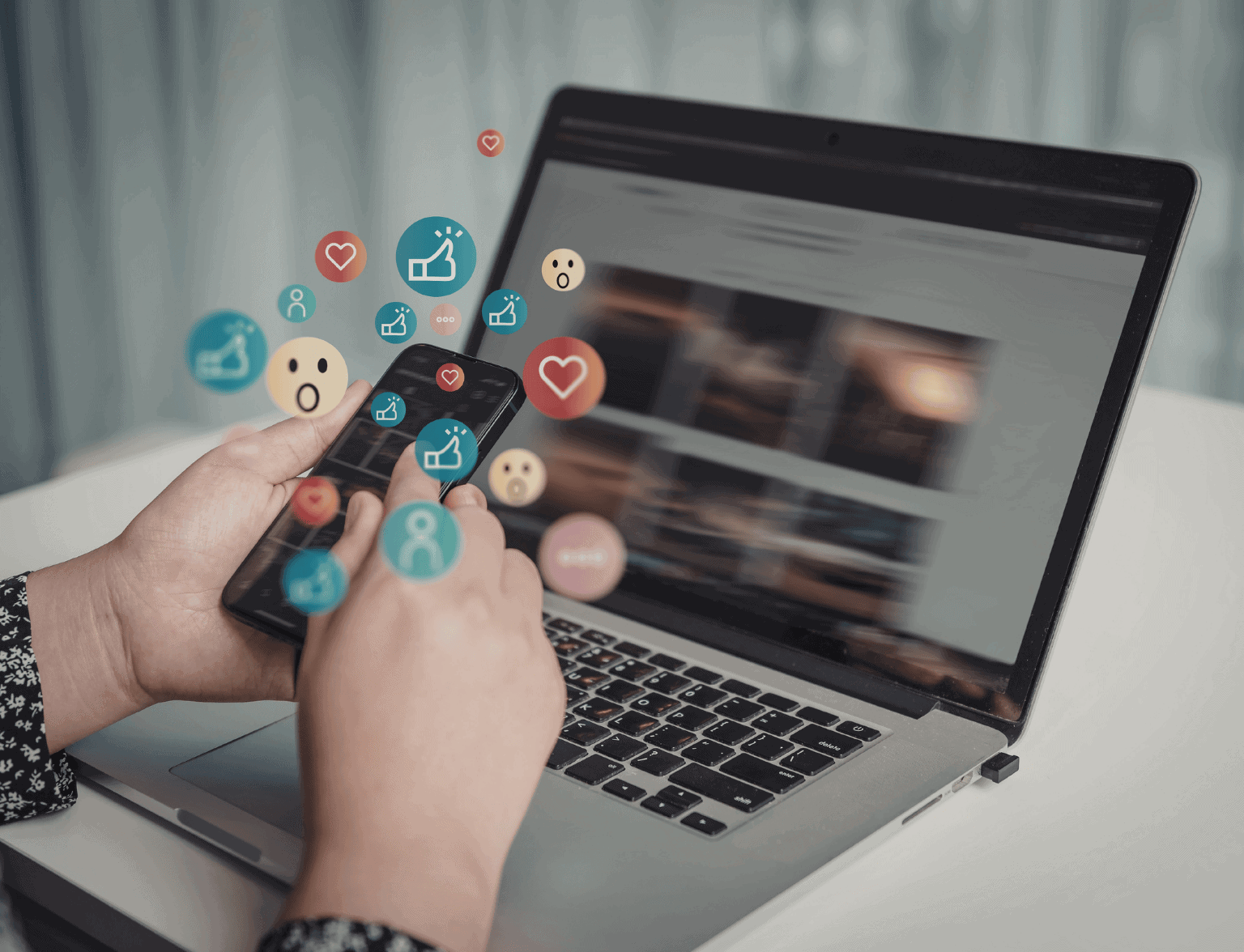

You wake up and reach for your phone before your feet hit the floor. You check notifications over breakfast, scroll through feeds during your commute, refresh your inbox between meetings, and doom-scroll through social media until well past midnight. In between, you’ve compared yourself to a dozen strangers, absorbed a steady stream of distressing news, posted something and quietly obsessed over the likes — and somehow ended the day feeling more isolated, more anxious, and more exhausted than when it began.
Sound familiar? You’re not just tired. You may be experiencing what researchers are now calling social media anxiety — a growing mental health phenomenon driven by our culture of constant connectivity.
48% of young adults say social media exacerbates their anxiety. The constant comparison, fear of missing out (FOMO), and exposure to distressing news can heighten feelings of anxiety. And it doesn’t stop at anxiety. Teens who use social media are at least three times more likely to have a diagnosis of depression or anxiety than those who do not.
We are living through an unprecedented mental health experiment — and billions of us are the subjects. At NVelUp.care, we see the real-world impact of social media on mental health every day in people struggling with anxiety, depression, mood disorders, and more. Understanding what’s happening — and what to do about it — could genuinely change your life.
The Scale of the Problem: What the Research Actually Shows
The numbers are impossible to ignore. Studies have proven that social media use is directly associated with increased rates of anxiety, depression, and other mental health issues. And nearly 40% of adults admit that social media makes them feel lonely or isolated.
40% of adults consider social media usage as a significant contributor to their stress levels. The constant influx of information, notifications, and the pressure to maintain an online presence can be overwhelming. This stress can manifest in various ways, including anxiety, depression, and overall mental fatigue.
For young people especially, the stakes are alarming. Research consistently shows that adolescents who use social media for more than two to three hours per day are at significantly higher risk for depression, anxiety, and emotional dysregulation.
And it’s not just a problem for teens. A major 2024 longitudinal study of over 15,000 adults found that a high frequency of posting on social media was associated with increased mental health problems a year later, providing evidence that some types of active social media use — particularly posting — have a stronger link to mental health outcomes than passive viewing.
This is a population-level mental health crisis playing out in real time — and most people don’t even realize they’re being affected.
How Social Media Hijacks Your Brain
To understand why social media is so damaging to mental health, you need to understand what it’s actually doing to your brain. The addictive nature of social media activates the brain’s reward center by releasing dopamine. Each notification, like, comment, or share creates a small dopamine hit — the same neurochemical mechanism underlying addiction to substances and gambling.
Over time, this trains your brain to crave constant stimulation. The silence of real life — a quiet dinner, an uninterrupted evening, a conversation without checking your phone — begins to feel uncomfortable. Your nervous system becomes conditioned to expect a level of stimulation that only a device can provide.
This has profound implications for mental health, particularly for people already navigating anxiety, depression, ADHD, PTSD, OCD, bipolar disorder, or other mood disorders. For individuals with ADHD, for example, the constant novelty of social media feeds delivers the kind of rapid stimulation that can become deeply entrenched, making it even harder to focus in the real world. For those with anxiety, the endless scroll keeps the nervous system in a state of low-grade activation that makes genuine relaxation nearly impossible.
The Five Pathways From Social Media to Mental Health Struggle
1. The Comparison Trap
Social media is often called a “highlight reel,” displaying the best parts of a user’s life. However, having access to others’ highlight reels can increase our own feelings of dissatisfaction with our own day-to-day. This can impact self-esteem, trigger anxiety, and make us want to use social media more.
The use of social media makes social comparison easier among young adults, leading to poor mental health and life dissatisfaction. When you’re already struggling with depression, this relentless comparison doesn’t just sting — it actively reinforces the cognitive distortions that keep depression entrenched: “Everyone else is happy. Something is wrong with me. I’ll never be enough.”
2. Fear of Missing Out (FOMO)
A meta-analysis involving 252,337 participants from 28 countries showed a moderately positive association between problematic social networking use and fear of missing out, with a correlation of r=0.496. That makes FOMO one of the strongest psychological links between social media use and anxiety.
The cruel irony is that the more anxiously you check social media to avoid missing something, the more anxious you become. It’s a feedback loop that can be particularly debilitating for people with anxiety disorders or panic disorder, where the fear of missing something feels urgent and uncontrollable.
3. Sleep Destruction
Constant connectivity has decimated healthy sleep patterns across entire generations. The blue light from screens suppresses melatonin production, but it’s not just about light — it’s about mental activation. Checking emotionally charged content right before bed keeps your mind engaged and your stress hormones elevated precisely when your nervous system needs to wind down.
For individuals managing bipolar disorder, consistent sleep is not optional — it’s clinically essential. Disrupted sleep can trigger both manic and depressive episodes. For those with PTSD, fragmented sleep worsens hypervigilance and emotional dysregulation. For people working with a psychiatrist on medication management, poor sleep can interfere with how medications metabolize and their overall effectiveness.
4. Cyberbullying and Online Hostility
The constant connectivity afforded by smartphones and social platforms allows negative peer interactions to follow adolescents beyond school hours, deeply impacting mental and emotional well-being. Social media platforms often serve as environments where peer aggression, exclusion, and harassment are amplified. Adolescents who are targeted frequently report increased levels of anxiety, depression, loneliness, and low self-worth.
This isn’t limited to adolescents. Adults experience professional harassment, public shaming, political hostility, and targeted criticism on social platforms daily. For individuals with personality disorders or high emotional sensitivity, this kind of sustained online hostility can be genuinely traumatizing.
5. Doomscrolling and News Anxiety
The news cycle never ends. Every crisis, tragedy, and political conflict is immediately pushed to your screen, often packaged in ways designed to maximize emotional impact and engagement. 50% of adults believe social media has a negative impact on their mental health, shaped by factors like cyberbullying, comparison culture, and the constant need for validation through likes and comments.
For people with generalized anxiety disorder, panic disorder, or OCD, this endless stream of alarming content can fuel catastrophic thinking, amplify health anxiety, and make it nearly impossible to experience the present moment as safe.
Who Is Most Vulnerable?
While social media affects virtually everyone’s mental health to some degree, certain groups face significantly elevated risk:
Teens and Young Adults
Teenagers (ages 13-17) are the most affected, with over 91% using social media daily. They are more prone to cyberbullying, social comparison, and mental health struggles linked to excessive screen time. Their brains are still developing — particularly the prefrontal cortex responsible for impulse control and emotional regulation — making them especially susceptible to social media’s manipulative design.
People with Pre-Existing Mental Health Conditions
For those already managing depression, anxiety, ADHD, PTSD, bipolar disorder, OCD, or personality disorders, social media isn’t a neutral tool. It’s an active risk factor that can worsen symptoms, undermine treatment, and delay recovery. If you’re currently working with a therapist or receiving medication management for anxiety, your social media habits deserve the same attention as your medication adherence.
Those in Social Isolation
People who are already lonely or socially isolated often turn to social media as a substitute for human connection. But nearly 40% of adults admit that social media makes them feel lonely or isolated — suggesting it frequently makes the underlying problem worse, not better.
Social Media and Specific Mental Health Conditions
Anxiety Disorders and Panic
For those struggling with anxiety, social media is essentially a constant anxiety trigger. A meta-analysis of 252,337 participants showed a moderately positive association between problematic social networking use and generalized anxiety (r=0.388) and social anxiety (r=0.437).
The 24/7 availability of anxiety-provoking content — health scares, political crises, social conflict, fear of missing out — keeps the nervous system in a chronically activated state that makes genuine recovery from anxiety nearly impossible without actively managing social media use.
Depression
Social comparison on social media is a particularly powerful driver of depression. Seeing curated highlight reels of others’ careers, relationships, vacations, and achievements while experiencing your own struggles in vivid, unfiltered reality creates a profoundly unfair comparison that fuels feelings of worthlessness, hopelessness, and inadequacy — the core cognitive distortions of depression.
For individuals seeking therapy for depression, social media habits that reinforce these distortions can significantly slow therapeutic progress. A skilled therapist will often address social media use as part of depression treatment.
ADHD
Social media is the ADHD brain’s dream and nightmare simultaneously. The rapid novelty, variable reward schedule, and infinite content supply provide the constant stimulation that ADHD brains naturally seek. But this comes at a profound cost: fragmented attention, impulsivity reinforcement, disrupted sleep, emotional dysregulation, and a steadily increasing difficulty tolerating the “boredom” of focused, meaningful work.
PTSD
For trauma survivors, social media can be a minefield of unexpected triggers — violent news footage, conflict-related content, or even seemingly innocuous posts that unexpectedly activate trauma responses. The unpredictable, uncontrollable nature of social media feeds makes it particularly difficult for people with PTSD to create the sense of safety and predictability essential to trauma recovery.
The Healing Power of Stepping Back: What the Research Shows
The good news is that reducing social media use creates measurable mental health improvements, often surprisingly quickly.
Limiting social media use to 30 minutes per day reduces anxiety and depression by 35%. People who take social media detoxes report higher levels of happiness and improved mental clarity. Disabling notifications can decrease social media-induced stress by 25%. Engaging in offline hobbies reduces the negative effects of social media by 40%.
These aren’t small improvements — they’re clinically meaningful changes that can complement the work done in therapy and support the effectiveness of medication management.
Practical Strategies for Reclaiming Your Mental Health
Set Non-Negotiable Boundaries
- Phone-free mornings: Don’t check social media for the first 30-60 minutes after waking. This protects your natural cortisol awakening response and sets a calmer emotional tone for the day.
- Phone-free bedrooms: Remove devices from your sleep environment entirely. This single change can dramatically improve sleep quality.
- Meal-time phone stacks: During meals, everyone at the table places their phone face-down in a stack. The first to check theirs does the dishes.
- Notification detox: Turn off all non-essential notifications. You don’t need to know about every like in real time.
Curate Aggressively
Look through your friends and followers list and unfollow people whose accounts make you feel bad about yourself. This isn’t unkind — it’s medically sensible. If certain accounts consistently trigger comparison, anger, anxiety, or inadequacy, unfollowing is a legitimate mental health intervention.
Replace, Don’t Just Remove
The key to sustainable reduction is replacement, not just elimination. When you remove social media time, fill it with activities that genuinely nourish mental health:
- Physical activity: Even a 20-minute walk delivers mood-boosting neurochemical benefits that rival scrolling’s dopamine hits but without the psychological damage
- In-person connection: Prioritizing in-person connections and activities helps improve mental health and can lead to decreased screen time
- Mindfulness practices: Meditation, journaling, or simple breathing exercises train your attention system in the opposite direction from social media — toward depth rather than distraction
- Creative engagement: Drawing, cooking, music, writing, crafting — activities that produce something and engage focused attention
Use Technology to Limit Technology
- Set daily app time limits through your phone’s screen time settings
- Use grayscale mode to make your phone visually less compelling
- Schedule specific “check windows” (e.g., 12PM and 6PM only) rather than unlimited access
- Delete the most problematic apps from your phone — access them only through a browser, which adds enough friction to interrupt mindless use
When Social Media Isn’t the Only Problem
Sometimes excessive social media use is a symptom of an underlying mental health condition rather than simply a bad habit. People with depression often use social media to numb emotional pain. Those with anxiety use it for reassurance-seeking. Individuals with ADHD use it to meet their stimulation needs. People with PTSD may use it to stay hypervigilant.
If you’ve genuinely tried to reduce your social media use and found yourself unable to — if it’s causing real distress but you can’t stop — that’s important clinical information. This pattern of behavior warrants professional attention, not just willpower.
At NVelUp.care, our integrated care model addresses exactly these kinds of interconnected challenges. A skilled therapist can help you explore the emotional needs that social media is — inadequately — trying to meet, and develop healthier strategies for meeting them. A psychiatrist can evaluate whether conditions like depression, ADHD, anxiety, or OCD are driving compulsive social media use and whether medication management might help create the neurological stability needed to change these patterns.
Our naturopathy services can address lifestyle factors — sleep, nutrition, physical activity — that influence both your mental health and your relationship with technology. And for men experiencing low testosterone symptoms that manifest as depression, low motivation, or emotional dysregulation, these hormonal factors can make it even harder to manage screen time and emotional reactivity — another area where comprehensive, coordinated care makes a real difference.
Building a Healthier Relationship With Social Media: A Week-by-Week Plan
Week 1 – Awareness Without Judgment: Track your social media use honestly using your phone’s built-in screen time tools. Note how you feel before and after each session. Don’t change anything yet — just observe.
Week 2 – Small, Strategic Cuts: Implement phone-free mornings and phone-free bedrooms. Turn off non-essential notifications. These two changes alone can shift your baseline anxiety meaningfully.
Week 3 – Curation and Boundaries: Unfollow accounts that reliably make you feel worse. Set a daily time limit of 45-60 minutes total across all platforms. Replace one hour of evening screen time with a deliberately chosen offline activity.
Week 4 – Integration and Reflection: Assess your mood, sleep quality, and anxiety levels compared to Week 1. Most people notice measurable improvements within three to four weeks of intentional reduction. Use this data to motivate continued change.
Ongoing – Maintenance and Support: Work with mental health professionals to address any underlying conditions that make managing social media difficult. Build social media boundaries into your ongoing wellness plan the same way you’d build in exercise or sleep hygiene.
You Deserve a Life That Exists Beyond the Screen
Here’s the truth about social media that its designers don’t want you to internalize: it was built to be as engaging as possible, not as healthy as possible. Your anxiety, your comparison spiral, your sleep disruption, your feeling of inadequacy — these aren’t personal failures. They’re the predictable outcomes of interacting daily with systems optimized for your engagement, not your well-being.
You are not obligated to be constantly connected. You are allowed to be unavailable. You are allowed to live your life without documenting it. You are allowed to feel genuine emotions without immediately sharing them. And you are allowed to seek help when the relationship with technology has become harmful.
Mental health is built in the real world — in authentic relationships, physical movement, restorative sleep, meaningful work, and genuine self-knowledge. Social media can supplement these things in small doses. But it cannot replace them, and for many people, it is actively dismantling them.
Take the Next Step Toward Real Connection and Genuine Calm
If social media is affecting your mental health — deepening anxiety, worsening depression, disrupting your sleep, or fueling emotional instability — you don’t have to navigate this alone. The team at NVelUp.care offers comprehensive, personalized mental health care that addresses the full picture of what’s driving your struggles.
Whether you’re looking for a psychiatrist near me, exploring online psychiatry options, seeking therapy for depression or anxiety, or wanting a holistic approach through our naturopathy services, we serve residents throughout Washington, Idaho, New Mexico, and Utah with the kind of integrated, coordinated care that actually moves the needle.
Our approach doesn’t just treat symptoms — it addresses root causes. Because sustainable mental wellness isn’t about managing one thing in isolation. It’s about being supported, seen, and enveloped in care that honors your whole self.
Your mental health matters more than your feed. Visit https://nvelup.care today and take the first step toward a calmer, more connected life — on your terms.